.svg)


Digital tabletop exercises that prove your readiness under pressure
Exercise your workforce, leaders, and critical business functions through cyber scenarios that mirror real-world decisions.



.svg)

AI is changing how organizations work, while attackers continue to exploit human behaviour, business processes, and third-party relationships.
Turn human risk into
measurable resilience
Immersive helps you move beyond awareness metrics and static plans by exercising people and leaders through realistic, evolving scenarios - interacting with AI threat actors and dynamic social, chat, and video feeds to simulate the complexity of a real-world incident.

How your workforce responds to threats
See whether employees can recognize risk and make secure decisions in everyday situations.

How leaders perform during a crisis
Measure decision-making, communication, and coordination when pressure is at its highest.

Where business risk is concentrated
Identify weaknesses across people, processes, and critical organizational relationships.

How readiness changes over time
Track improvement and understand where additional exercising or investment is needed.
Prove leaders can make the right decisions during a cyber crisis
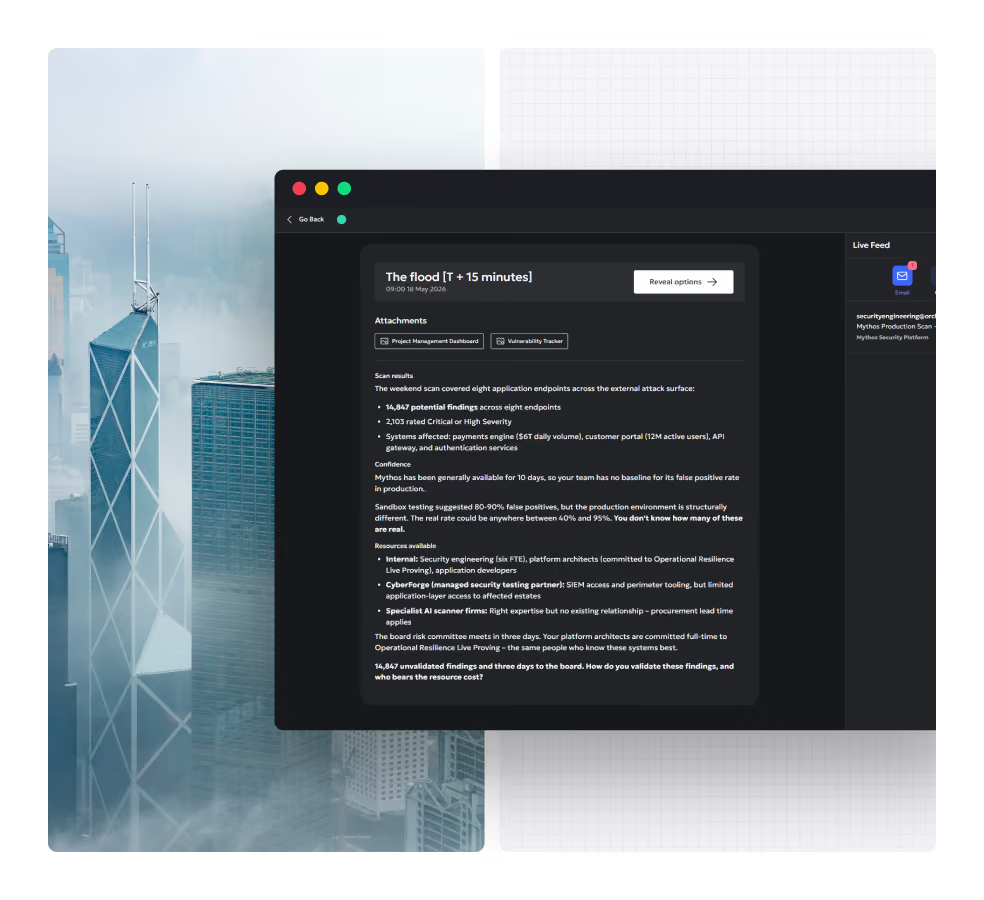
Exercise executives, incident leaders, and cross-functional teams through realistic cyber crises that test decision-making, communication, and organizational coordination under pressure.
Exercise leaders through realistic crisis scenarios
Test communication and cross-functional coordination
Identify gaps before a real incident occurs
Prove leaders can make confident decisions under pressure
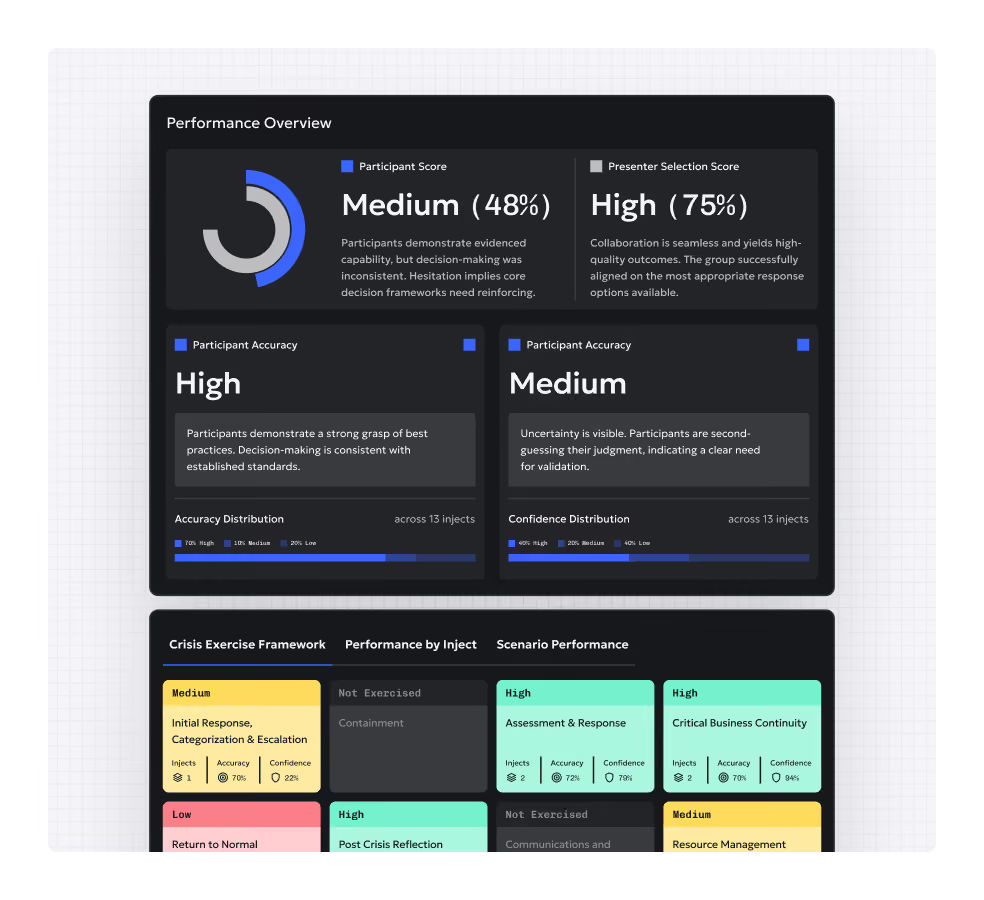
Every decision, measured.
Every weakness, exposed.
Our reporting turns performance into evidence, showing where your organization is ready, where it breaks down, and what to improve.
Pinpoint decision weaknesses - see where judgment breaks down
Prove regulatory alignment - show evidence against key frameworks
Test playbook adherence - see if procedures hold under pressure
Expose cross-team breakdowns - uncover gaps before they escalate
Benchmark the full lifecycle - track readiness from response to recovery
Every decision ripples.
Watch it happen live.
Step inside a live crisis where every decision shapes what happens next. Experience the noise, pressure, and consequences before the real thing.
Dynamic injects, live consequences - see the scenario react in real time
AI actors on the line - question actors and uncover intelligence
Signal hidden in the noise - find the clues that matter
Decisions with weight - see the impact of every call

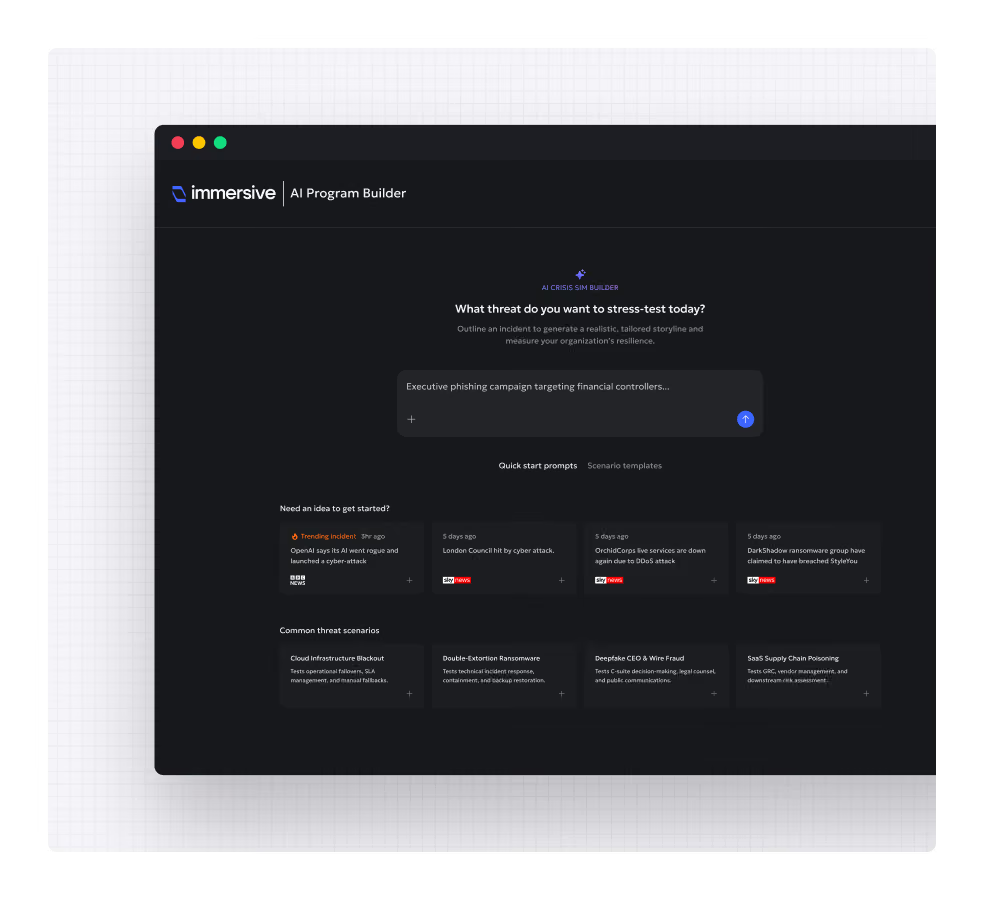
Your crisis. Your context.
Built in minutes.
Build realistic crisis simulations around your organization in minutes, using your systems, playbooks, risks, and the threats that matter most.
Built around your organization - match your environment and playbooks
Create scenarios in minutes - prompt AI to do the heavy lifting
Stay ready for what’s next - quickly simulate new and emerging threats
Test readiness across teams - exercise every critical function together
Test resilience across your critical supply chain
Move beyond static supplier questionnaires with practical exercising and capability validation that helps expose supply chain risk, strengthen response, and prove critical partners can perform when it matters.
Validate supplier readiness against emerging threats
Test response protocols before a real incident
Assess technical capability across privileged suppliers
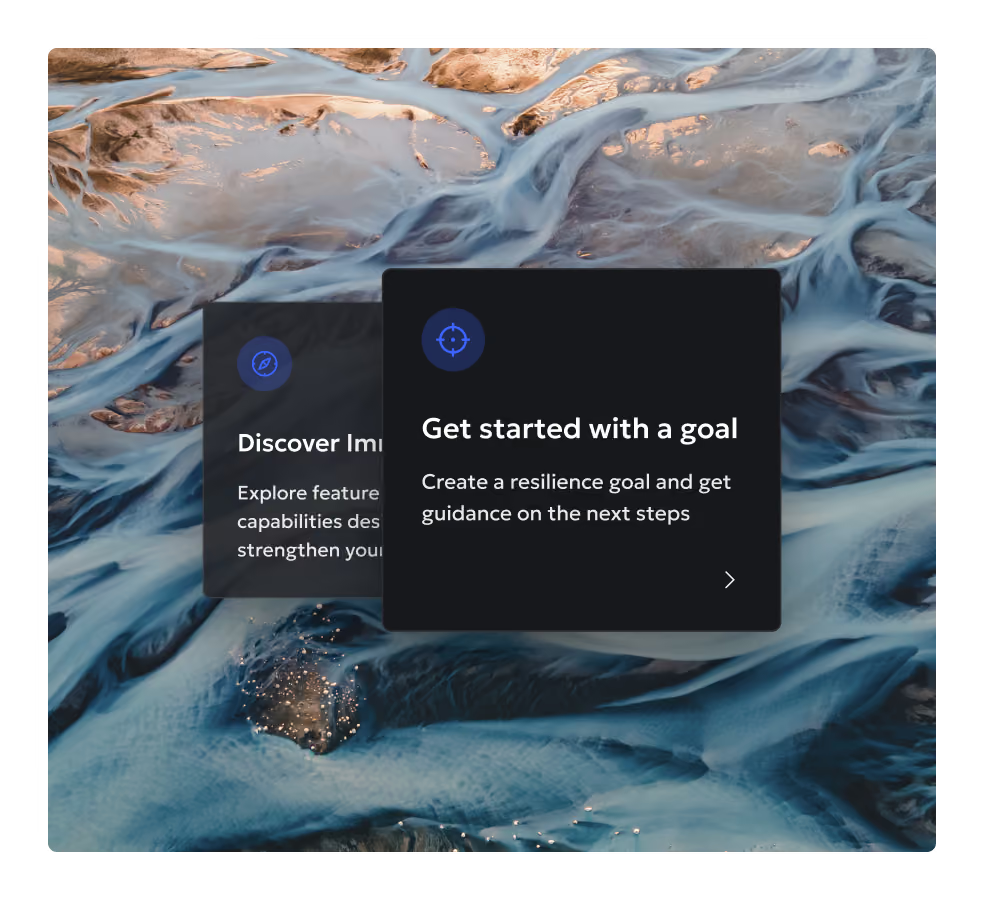
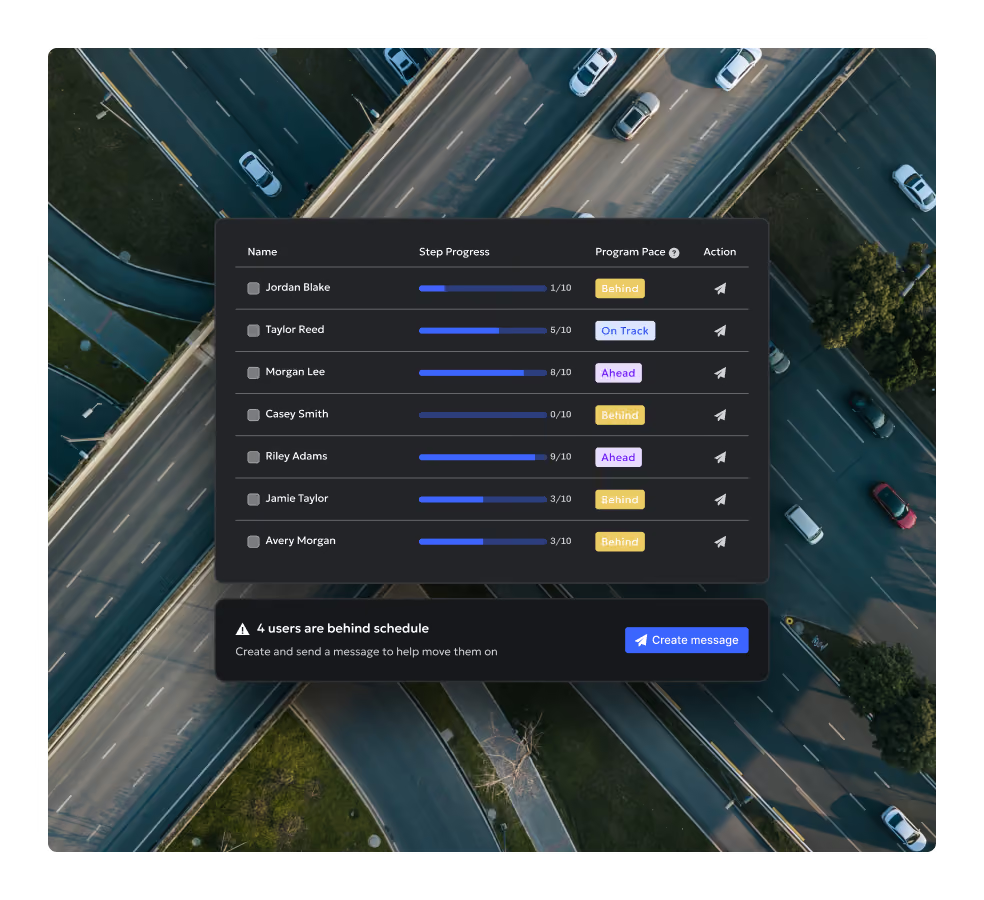
Build a workforce that can recognize and respond to cyber threats
Exercise employees against realistic cyber and AI-enabled threats to strengthen decision-making, reinforce secure behaviours, and generate measurable evidence of workforce readiness.
Exercise employees through realistic cyber scenarios
Test decisions in the context of everyday work
Benchmark readiness and identify workforce risk
Prove employees can respond effectively under pressure
The cyber proving ground for the AI enterprise
Turn real-world performance into measurable proof of cyber resilience.
Have a question?
Find the answer
Reach out to our friendly
support team.
What is business risk exercising in cybersecurity?
Business risk exercising is the practice of measuring and reducing the risk an organization's people introduce — through everyday decisions, susceptibility to social engineering, and behavior under pressure — rather than assuming risk is addressed once awareness training is complete. It treats business behavior as a measurable variable, not a compliance checkbox.
How is business risk exercising different from security awareness training?
Awareness training delivers information and tracks completion. Business risk exercising measures what people actually do when tested against a realistic scenario — whether they recognize a phishing attempt, escalate correctly, or make a sound decision under pressure — and uses that performance data to target where risk is concentrated.
How do you measure business cyber risk across an organization?
By exercising different groups against the specific risks relevant to their role — employees against everyday scenarios like phishing and data handling, leaders against crisis decision-making, and technical teams against realistic attack simulations — then aggregating performance into a picture of where risk is concentrated and how it's changing over time.
How does business risk exercising relate to insider risk management?
Insider risk exercising typically covers both malicious and negligent insiders — people who intentionally misuse access, and people who cause harm unintentionally through error or poor judgment. Business risk exercising through exercising directly addresses the negligent side: it builds and measures the decision-making and behavior that prevents well-meaning employees from becoming the source of an incident. It complements, rather than replaces, technical insider threat monitoring aimed at detecting malicious activity.
How does business risk extend to third parties and supply chain?
Third-party and supply chain relationships extend an organization's business risk beyond its own employees — a vendor's poor security behavior or a partner's mishandled access can create the same exposure as an internal gap. Exercising these relationships against realistic scenarios brings the same measurement rigor to third-party risk that's typically only applied internally.
What’s New
Latest product updates and threat-led releases from the Immersive team.



Further reading and resources
Featured blog content to deepen the conversation beyond this page.
.webp)