.svg)


Cybersecurity learning paths that build capability and prove readiness
Build the right workforce capabilities, adapt to changing priorities, and prepare your people for the AI era.



.svg)

Resilience Pathways combines expert guidance, AI-powered recommendations, and continuous insight to help you build, adapt, and measure workforce development without spreadsheets or manual program design.
Turn strategy into measurable readiness
Move from business objectives to measurable capability in days, not weeks.

Start with your priorities
Translate security objectives and business risks into clear capability goals.

Build targeted programs
Create role-based development journeys aligned to the outcomes your organization needs.

Adapt as priorities change
Refine programs as new technologies, threats, and capability requirements emerge.

Measure and prove progress
Track readiness and generate evidence for leaders, auditors, and regulators.
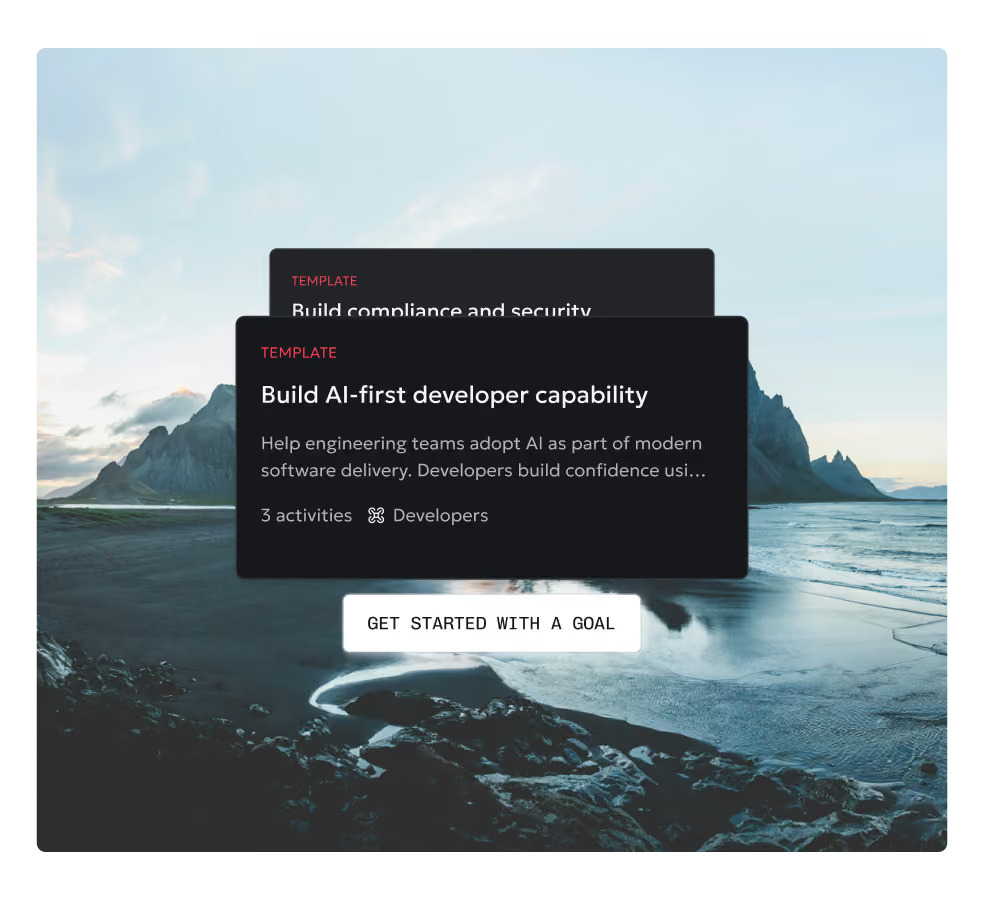
Deploy expert-curated
goals from day one
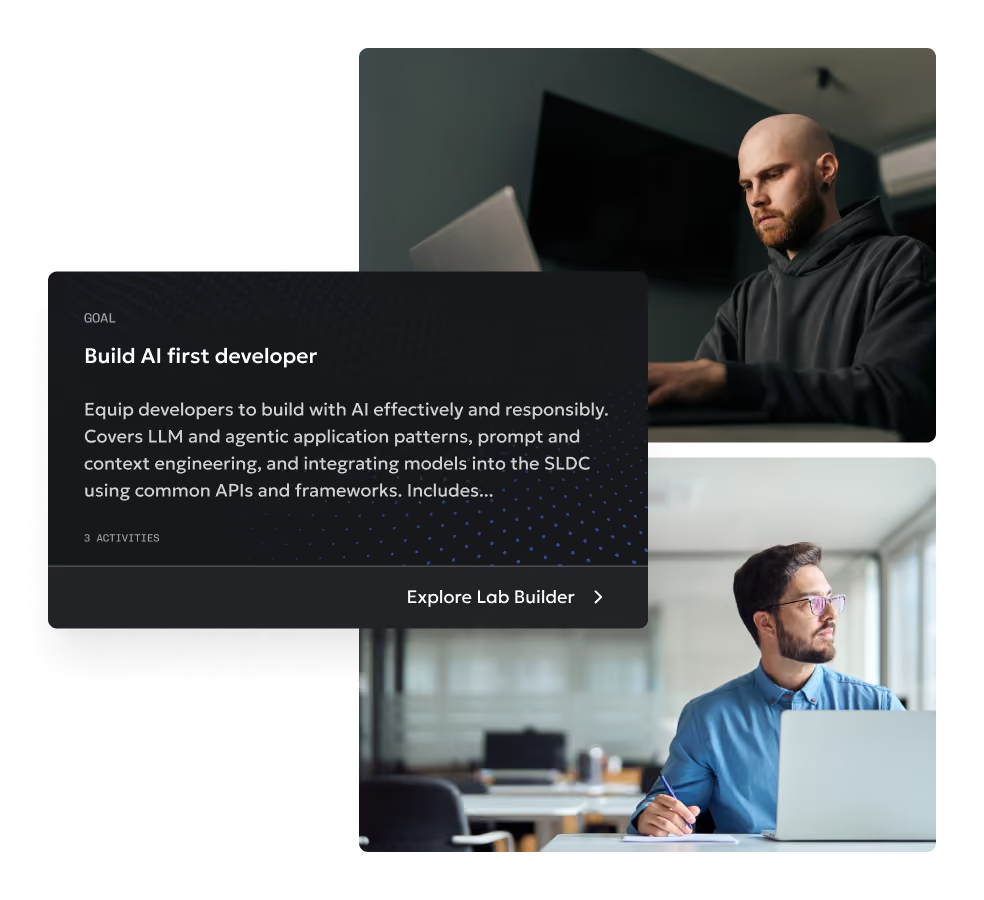
Deploy targeted programs within minutes using Guided Goals – aligned with your cyber resilience priorities and organizational outcomes.
Choose from expert-built capability goals
Align development to common security priorities
Launch targeted programs faster
Track progress and report with confidence
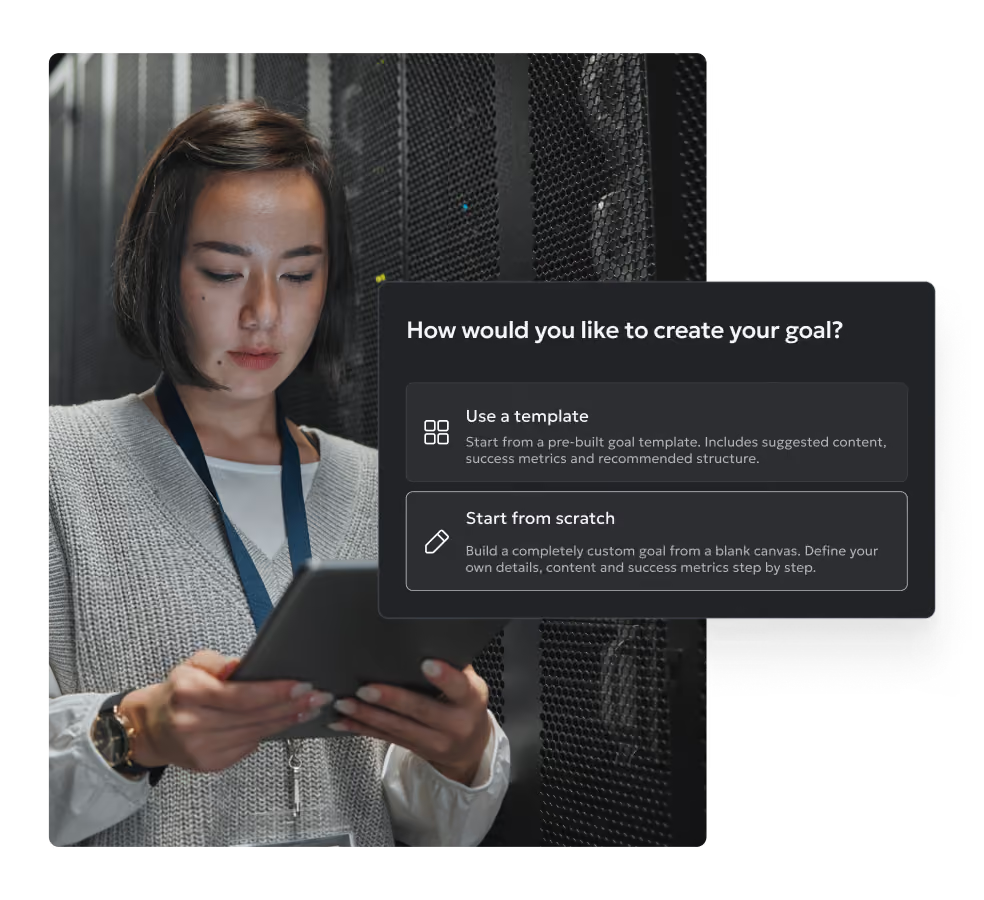
Build bespoke resilience pathways for specific use cases
Create custom goals around your technology, risks, and business objectives, giving teams a development journey that reflects the capabilities your organization needs most.
Define organization-specific capability goals
Target priority roles, teams, and technologies
Align programs to business outcomes
Track progress against custom measures
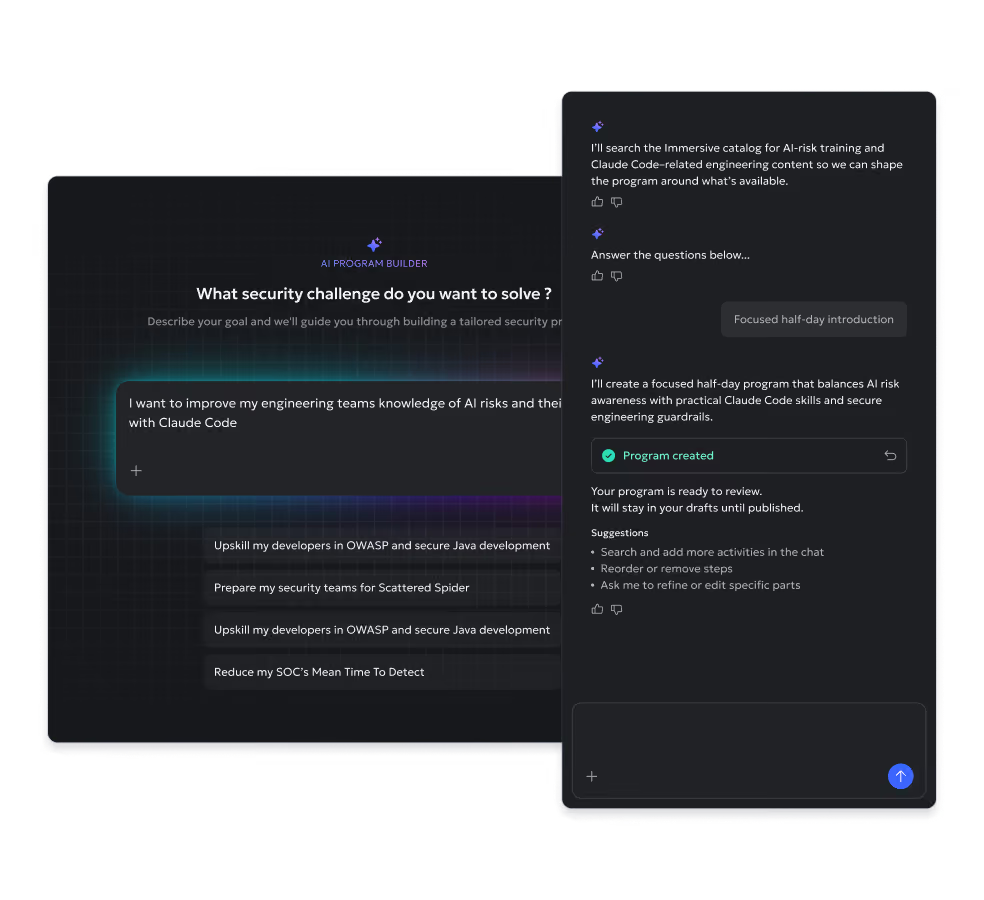
Turn security strategy into targeted programs with AI
Transform high-level security objectives into tailored capability programs that help your organization build the right skills faster and prove readiness against business priorities.
Create programs from strategic objectives
Generate role-based learning paths in seconds
Adapt programs as priorities change
Review transparent AI recommendations
Prove AI knowledge
before granting access
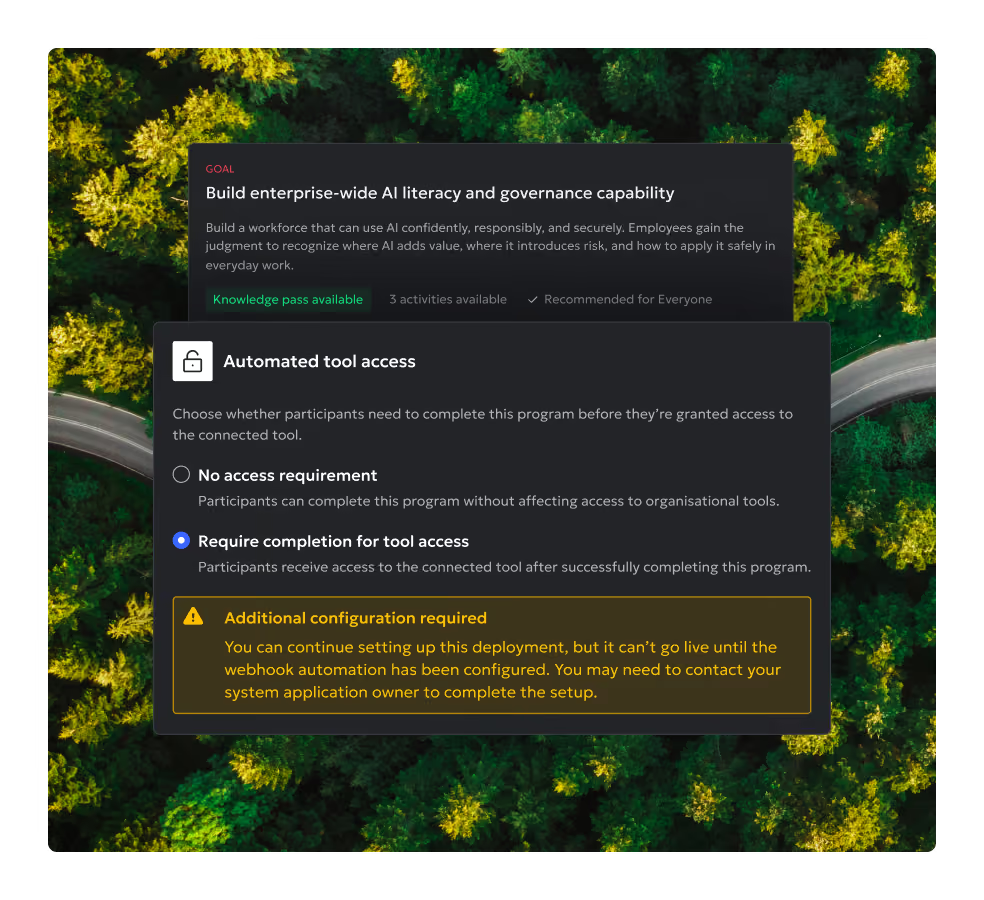
Enable secure AI adoption by validating workforce knowledge before employees gain access to AI tools, helping you automate governance and prove readiness at scale.
Build role-specific AI knowledge
Connect access to proven competency
Track readiness with real-time evidence
Support governance and compliance reporting
Measure capability with assessments that adapt
to each learner
Evaluate knowledge and capability through assessments that adjust to individual performance, helping you identify gaps, target development, and measure readiness more accurately.
Adapt questions to individual performance
Identify knowledge and capability gaps
Target development where it is needed
Track measurable improvement over time
Connect every pathway to measurable resilience
Bring goals, programs, assessments, and workforce performance into a continuous view of organizational readiness.
Understand where capability is improving, identify areas that need attention, and provide leaders with objective evidence that development is reducing real business risk.




Measure capability
Understand what people know and how effectively they can apply it.
Identify gaps
Reveal development areas across roles, teams, and priority capability areas.
Benchmark progress
Track readiness and compare performance over time.
Report evidence
Give leaders clear proof of workforce development and resilience.
Understanding the differences: skills assessment vs. certification vs. maturity assessment
Choose the right assessment based on what you need to evidence – from individual skills through to organizational maturity.
| Skills Assessment | Certification | Maturity Assessment | |
| What it measures | Demonstrated capability on real tasks | Knowledge against a defined body of knowledge | Process and control maturity against a framework |
| Unit of analysis | Individual, team, and organization | Individual | Organization or function |
| Method | Practical tasks in a live environment, scored on outcome | Proctored exam, usually knowledge-based; some include a practical component | Interview, document review, and self-report |
| Frequency | Continuous | Once, then renewed on a multi-year cycle | Annual or biannual |
| Validity window | Reflects capability now | Commonly around three years, depending on the certifying body | Point in time |
| Framework alignment | NIST NICE work roles and MITRE ATT&CK techniquess | The certifying body's own syllabus | NIST CSF, ISO 27001, C2M2 |
| What it proves | This individual can perform this task today | This individual passed an exam at a point in time | The process is documented and repeatable |
| Blind spot | Doesn't assess process design or external attack surface | Says nothing about current performance or team coverage | Documented process isn't practiced response |
| Best used for | Role readiness, gap closure, workforce planning | Commonly around three years, depending on the certifying body | Point in time |
| Immersive capability | Hands-On Labs and Team Exercises from Resilience Pathways | - | - |
The cyber proving ground for the AI enterprise
Turn real-world performance into measurable proof of cyber resilience.
Have a question?
Find the answer
Reach out to our friendly
support team.
What is a cybersecurity Resilience Pathway?
A cybersecurity Resilience Pathway is a structured, role-based development journey that maps an individual's or team's current capability to the skills their role requires, then sequences training to close that gap. Unlike generic training curricula, it's built around demonstrated capability and organizational priorities rather than a fixed course catalog.
How is a cybersecurity Resilience Pathway different from traditional security awareness training?
Traditional training delivers the same content to everyone on a schedule. A cybersecurity Resilience Pathway is generated from your organization's actual priorities, adapts as those priorities change, and is measured through hands-on assessment rather than course completion.
What's the difference between Guided Goals and Custom Goals?
Guided Goals are expert-curated and ready to deploy immediately. Custom Goals let you define organization-specific capability targets for teams whose needs — a particular technology, business risk, or use case — don't fit a standard template.
What is AI Knowledge Pass?
AI Knowledge Pass validates a person's AI-related knowledge before they're granted access to AI tools — connecting access to proven competency rather than a one-time policy acknowledgment, and supporting governance and compliance reporting as AI adoption scales.
How does Resilience Pathways measure and report overall progress?
By connecting goals, programs, and assessment data into a continuous view — showing what's improving, where gaps remain, and giving leaders evidence to report to auditors and regulators.
What’s New
Latest product updates and threat-led releases from the Immersive team.



Further reading and resources
Featured blog content to deepen the conversation beyond this page.
.webp)