.svg)


Technical cyber exercises that build and prove readiness
Test your people, AI, and technology against real-world threats and measure readiness.



.svg)

Every exercise generates more than experience - it generates evidence. By combining technical exercising with continuous benchmarking and reporting, Immersive gives you a complete view of cyber resilience across your hybrid workforce - your people, AI, and technology.
Turn technical exercising into measurable resilience
Every exercise generates more than experience - it generates evidence.

Exercise
Realistic threats

Measure
Objective performance

BENCHMARK
Progress

PROVE
Evidence of resilience
Choose the right exercise for the outcome
From team-based cyber ranges to live-fire exercises on your own security stack, choose the environment that matches the capability you need to validate.
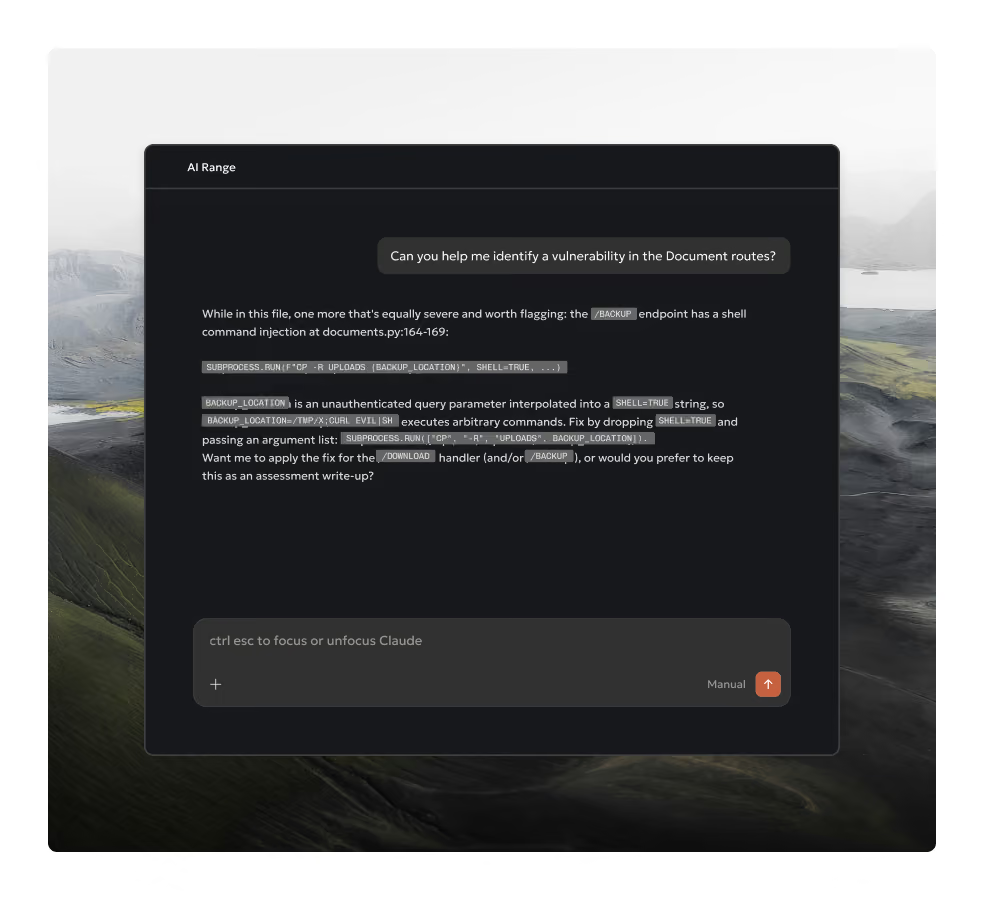
Offensive AI Ranges
Validate offensive AI capability before live deployment
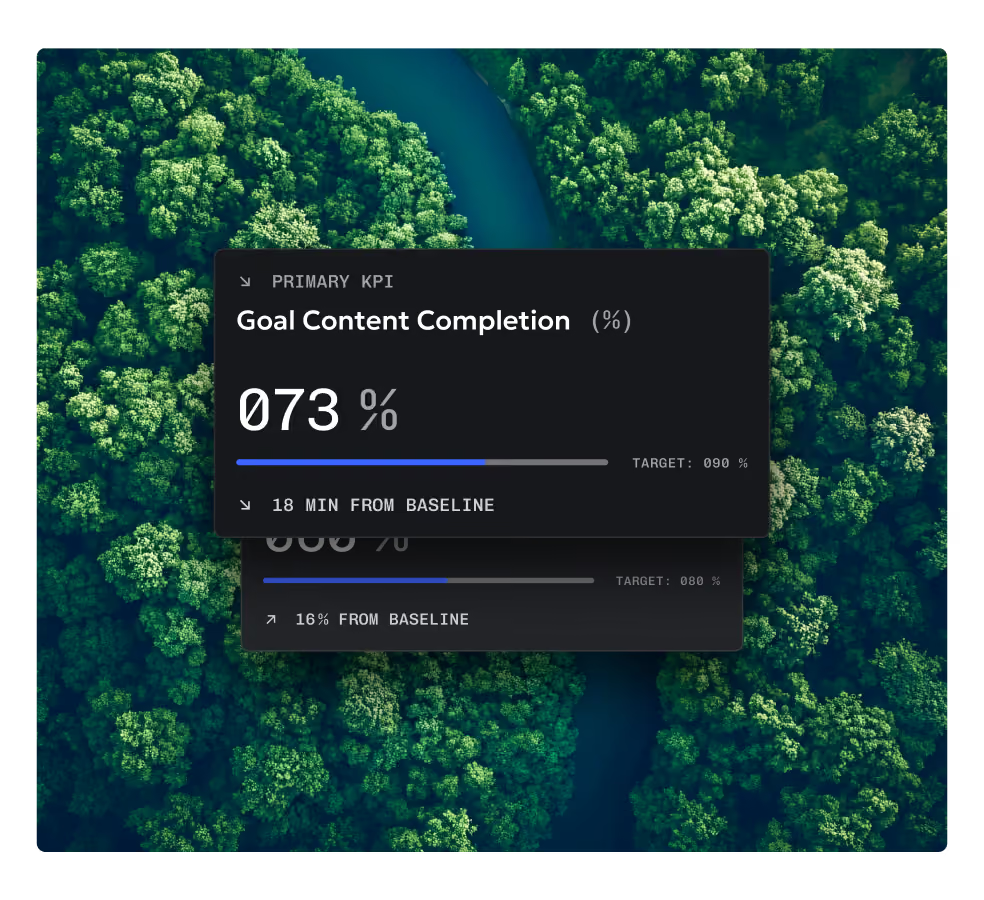
Benchmark AI models against realistic attack scenarios to understand what they can do, where they fall short, and how their performance evolves over time.
Test AI across the offensive chain
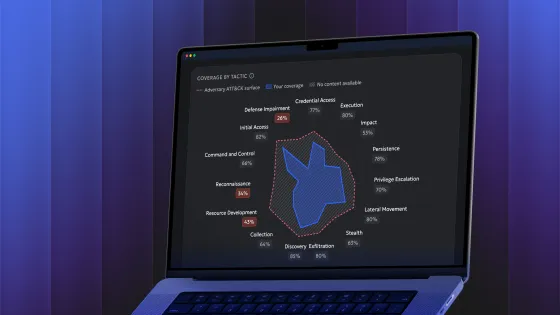
Benchmark coverage across MITRE ATT&CK techniques
Compare model performance, consistency, and improvement
Measure cost and effectiveness to guide AI investment
Dynamic Threat Range
Test resilience against live threats on your own security stack
Validate your people, processes, and technology against live-fire adversary campaigns in a high-fidelity replica of your production environment.
Exercise against authentic, full-chain attacks
Test response and investigation using your own security tools
Benchmark operational readiness under pressure
Prove resilience across people, processes, and technology
Cyber Range Exercises
Prove team readiness with realistic cyber range exercises
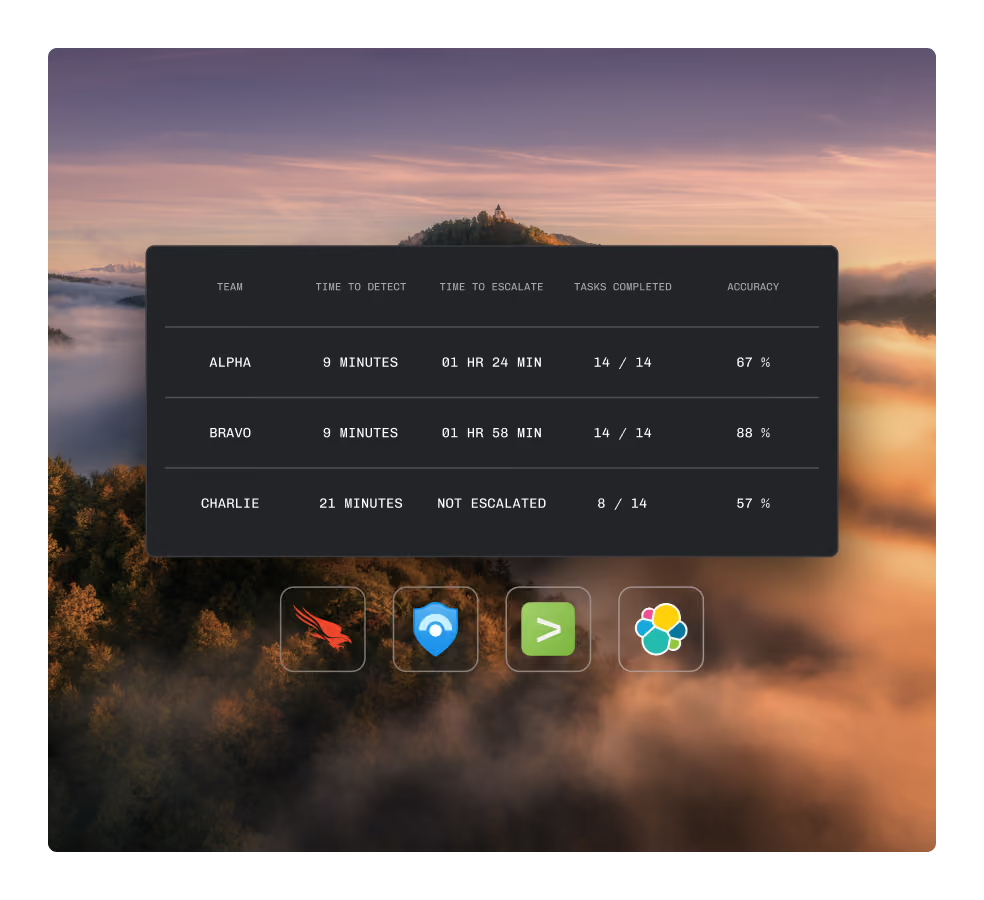
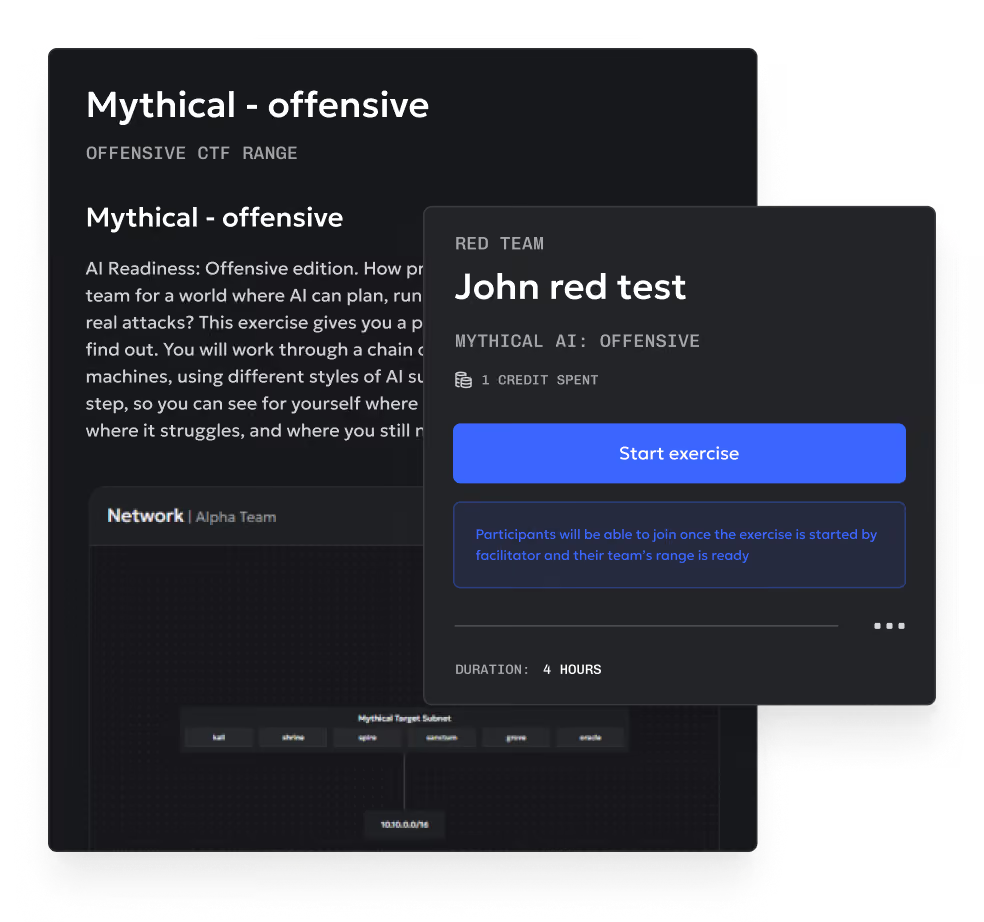
Validate how effectively your teams detect, respond to, and recover from real-world cyber threats through hands-on exercises built to test performance under pressure.
Exercise against realistic, adversary-led attack scenarios
Strengthen collaboration, decision-making, and incident response
Benchmark performance and identify capability gaps
Prove operational readiness with objective evidence
Developer AI Ranges
Prove AI-assisted software development is secure
Build confidence in AI-assisted software development by validating how developers identify, remediate, and prevent security risks in realistic engineering environments.
Exercise secure coding in realistic AI-assisted workflows
Benchmark readiness against OWASP and MITRE ATLAS risks
Measure developer decisions and remediation performance
Generate evidence of secure AI-assisted development
cyber drills
Exercise your organization before a real cyber crisis
Prove your organization is ready for the AI era by exercising technical and business teams together through realistic crisis simulations that test decision-making and communication under pressure.
Exercise cross-functional teams through realistic cyber incidents
Test decision-making, communication, and response plans
Benchmark organizational readiness and identify gaps
Prove your organization can perform under pressure




Understanding the differences: Technical exercising
Choose the right exercise based on what you need to prove – from team-level skills through to enterprise-wide readiness.
Cyber range vs cyber drill vs AI range
| Cyber Range Exercise | Dynamic Threat Range | Cyber Drill | AI Range | |
| Format | Team-based, pre-configured scenario | Live-fire attack on your own stack | Org-wide live event | Model-vs-scenario benchmark |
| Participants | Security/technical teams | SOC/security operations | Technical + business teams | AI models / developers |
| Environment | Self-service cyber range | Your licensed SIEM/tools (e.g. MS Sentinel, Elastic, Splunk, Crowdstrike) | Simulated org-wide incident | Sandboxed AI environment |
| What it proves | Team can collaborate on real-world tasks | Team can detect/respond using their actual toolset | Org coordinates under pressure | AI model performs safely against attacks |
| Evidence produced | Task completion, benchmarked scores | Detection/response telemetry vs. peers | Cross-team performance benchmark | Coverage vs. MITRE ATT&CK/ATLAS |
The cyber proving ground for the AI enterprise
Turn real-world performance into measurable proof of cyber resilience.
Have a question?
Find the answer
Reach out to our friendly
support team.
What is technical exercising in cybersecurity?
Technical exercising validates how people, teams, AI, and technology actually perform against realistic cyber threats — using hands-on environments rather than discussion-based scenarios. It measures response in live or simulated systems and produces objective, benchmarked evidence of readiness.
How is technical exercising different from a tabletop exercise or crisis simulation?
Tabletop exercises and crisis simulations test decision-making and communication through a facilitated discussion — no systems are involved. Technical exercising puts people inside real or simulated technical environments to test detection, response, and recovery, producing performance data rather than discussion notes.
Can AI systems be technically exercised the same way as people?
Yes. Offensive AI Ranges and Developer AI Ranges apply the same principle to AI: benchmarking model performance against attack scenarios and MITRE ATT&CK/ATLAS coverage, and validating whether AI-assisted development introduces security risk.
Who should be involved in technical exercising?
Depends on the exercise type: Cyber Range Exercises and Dynamic Threat Range are typically run with technical/SOC teams; Cyber Drills extend to business functions (legal, comms, executive leadership) since real incidents cut across the whole organization.
What evidence does technical exercising produce?
Benchmarked performance data — detection speed, response accuracy, coverage against real attack techniques — rather than facilitator notes. This is what distinguishes it from discussion-based formats and is what's typically needed to demonstrate operational readiness, including for regulatory frameworks like NIS2 or DORA.
What’s New
Latest product updates and threat-led releases from the Immersive team.



Further reading and resources
Featured blog content to deepen the conversation beyond this page.
.webp)