.svg)
From AI Access to Verified, Secure Performance: How to Activate Team Readiness in the AI Era
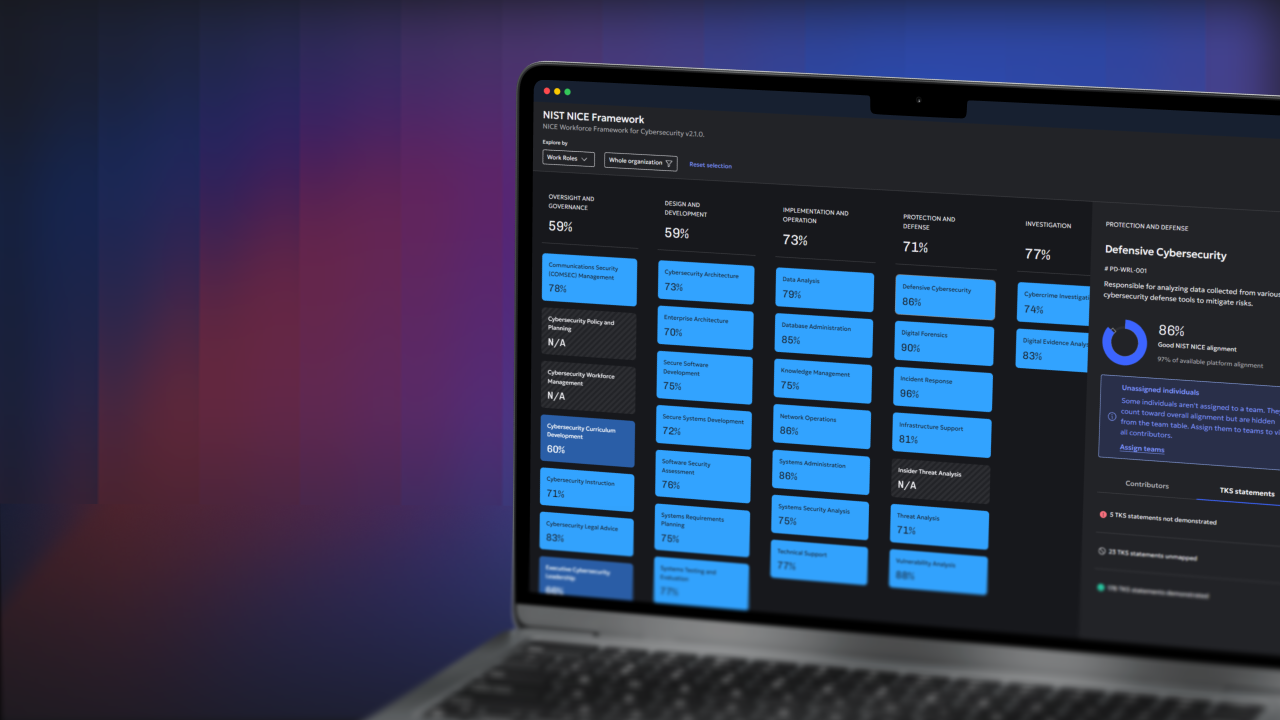


Access to AI tools is outpacing evidence that teams are ready to use them. Employees are experimenting across use cases, developers are reviewing AI-generated code, and security teams are defending increasingly complex, AI-enabled environments. But access does not guarantee readiness. Teams still need to prove they can use powerful tools securely, defend effectively, and recognize when risk is introduced.
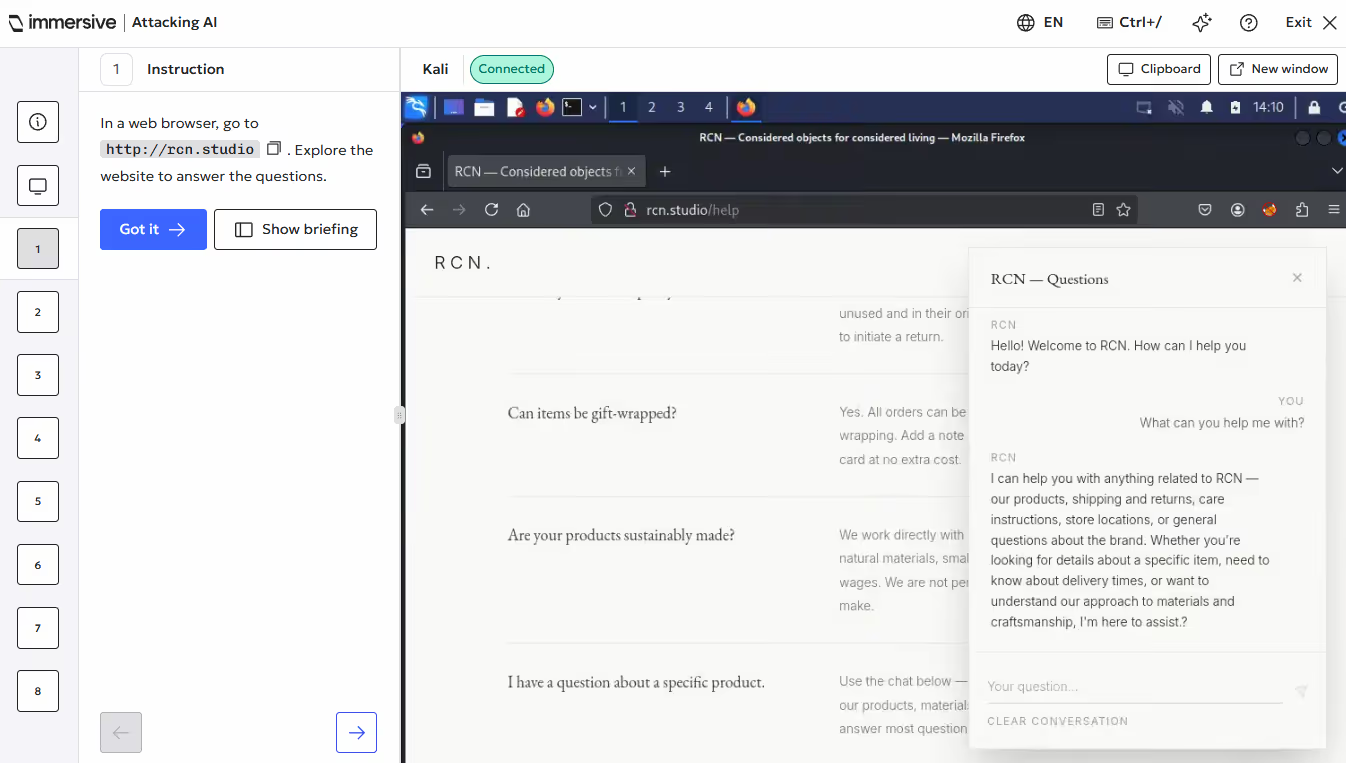
Whether you manage security analysts, developers, technical teams, or employees using AI in day-to-day workflows, there’s no time to rely on assumptions. With Immersive One’s Vendor-Enabled Realism capability, teams can validate performance in sandboxed environments that mirror the tools, workflows, and AI-enabled scenarios they encounter in real work. The result is a practical way to activate readiness across the full lifecycle of risk: from secure AI use to SecOps response, AppSec review, and governance across your workforce.
Build Secure AI Habits Organization-Wide
Employees use AI as part of their day-to-day to summarize information, draft content, analyze data, automate tasks, and accelerate decision-making. That creates real productivity potential, but also introduces risk when employees are unsure what data is safe to use, how to structure prompts, or where security boundaries apply.
Immersive One gives managers a practical way to move teams from AI experimentation to secure, productive use. Through realistic scenarios, teams can:
- Exercise a security mindset by applying safe prompting, PII handling, and responsible model interaction before risky behaviors affect real systems or sensitive data.
- Reduce shadow AI risk by understanding what information is safe for AI use and where intellectual property, customer data, or internal context could create exposure.
- Build confidence with leading AI tools such as Claude, Gemini, and OpenAI, so productivity gains do not come at the cost of security, privacy, or governance.
- Accelerate secure adoption by validating whether employees can make sound decisions where productivity and risk meet.
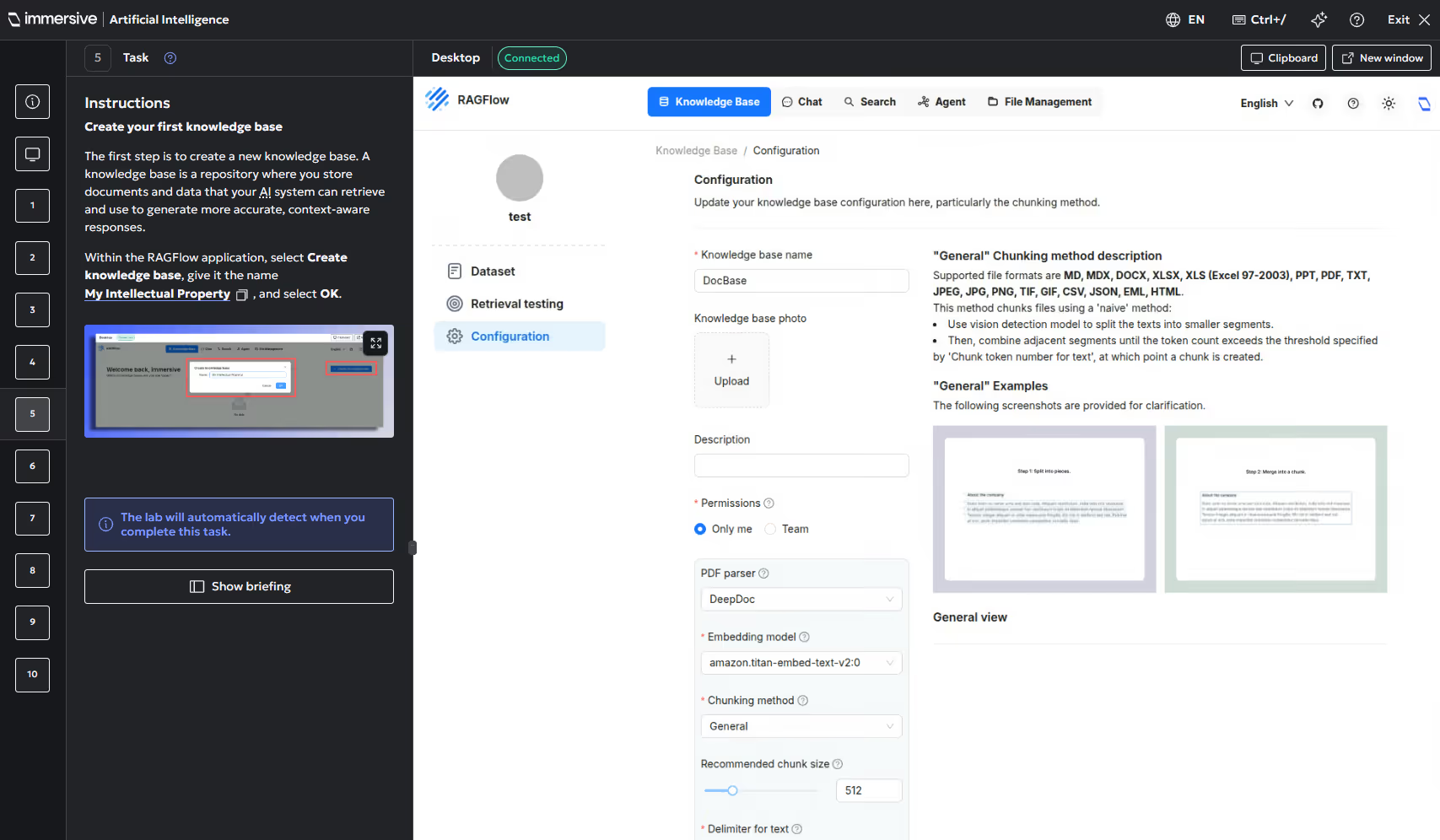
Prove SecOps Performance in AI-Era Security Tools
When incidents are unfolding live, security analysts need to navigate the tools they use every day, interpret complex signals, and respond under pressure. That becomes even more critical as AI-enabled threats and agentic systems introduce new variables into the operating environment.
With Vendor-Enabled Realism built into Immersive One, SecOps managers can validate team performance in high-fidelity environments that reflect production workflows:
- Benchmark analyst capability across familiar SecOps platforms such as Microsoft Sentinel, CrowdStrike Falcon Next-Gen SIEM, Splunk, Google Security Operations, Elastic, and other core security tools.
- Strengthen detection and response workflows by testing whether analysts can move from signal detection to investigation, escalation, and response when pressure is high and context is incomplete.
- Prepare for AI-enabled incidents by practicing how to identify hijacked or malfunctioning agents, unexpected behavior, recursive loops, or unauthorized data access.
- Develop operational muscle memory in the same tools, environments, and workflows analysts rely on during real incidents.
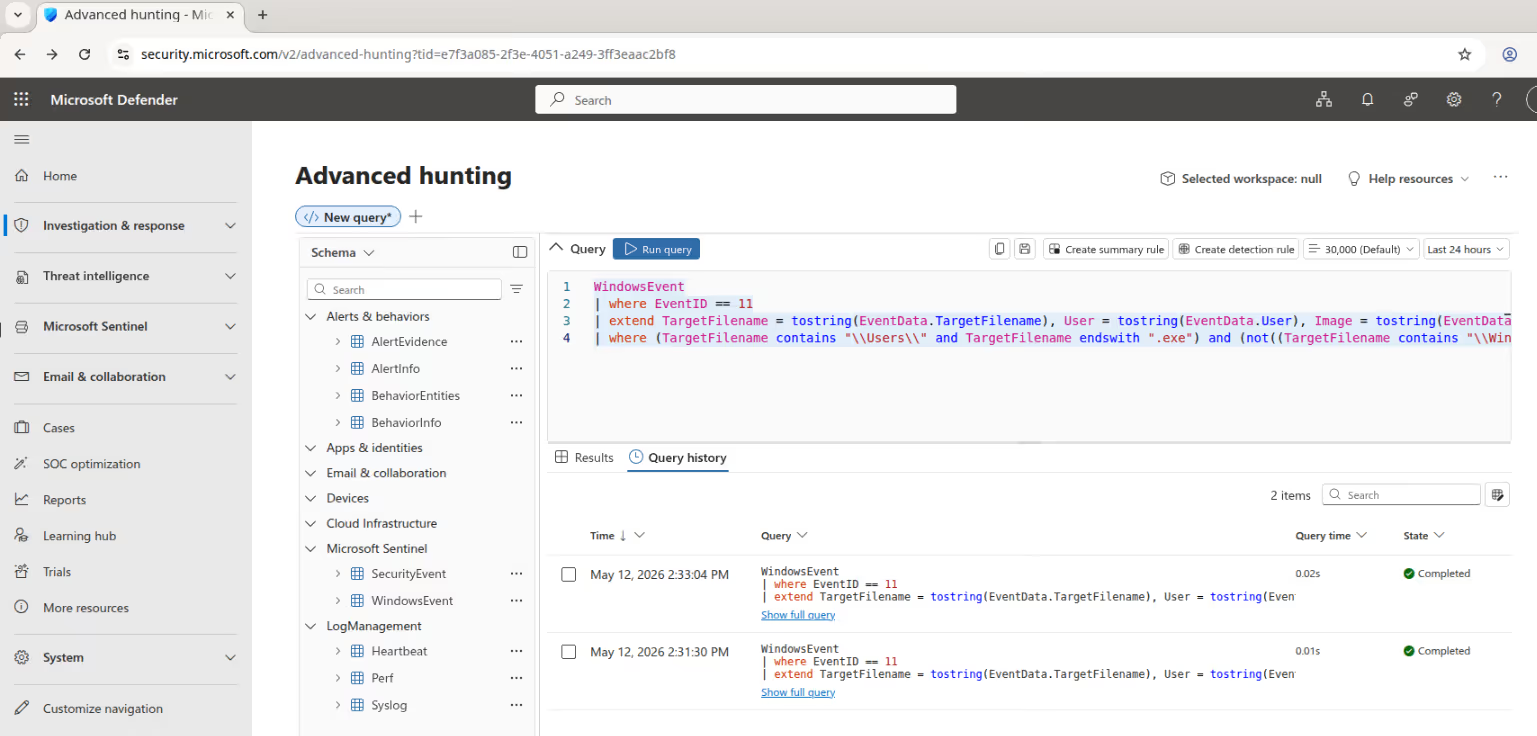
Where relevant, framework alignment helps connect analyst performance to recognized threat models such as MITRE ATT&CK, making it easier to relate day-to-day response capability to real-world adversary behavior.
Validate Secure Development in AI-Assisted Pipelines
As AI-generated code becomes more common, developers are increasingly responsible for reviewing, validating, and securing AI-assisted output before it reaches production. That shifts AppSec from policy awareness to applied execution inside the development workflow.
Immersive One helps AppSec and security engineering managers validate secure development capability in realistic pipeline scenarios, making governance part of the workflow rather than a separate checkpoint. Hands-on exercises help teams:
- Identify vulnerabilities in AI-assisted code before flaws enter the software supply chain.
- Connect secure development capability to operational gates through GitHub-integrated scenarios and branch-protection logic.
- Reduce risk at the source by remediating security flaws earlier in the CI/CD lifecycle.
- Strengthen the developer’s role as secure reviewer by giving engineering teams practical experience applying security judgment as AI accelerates code creation.
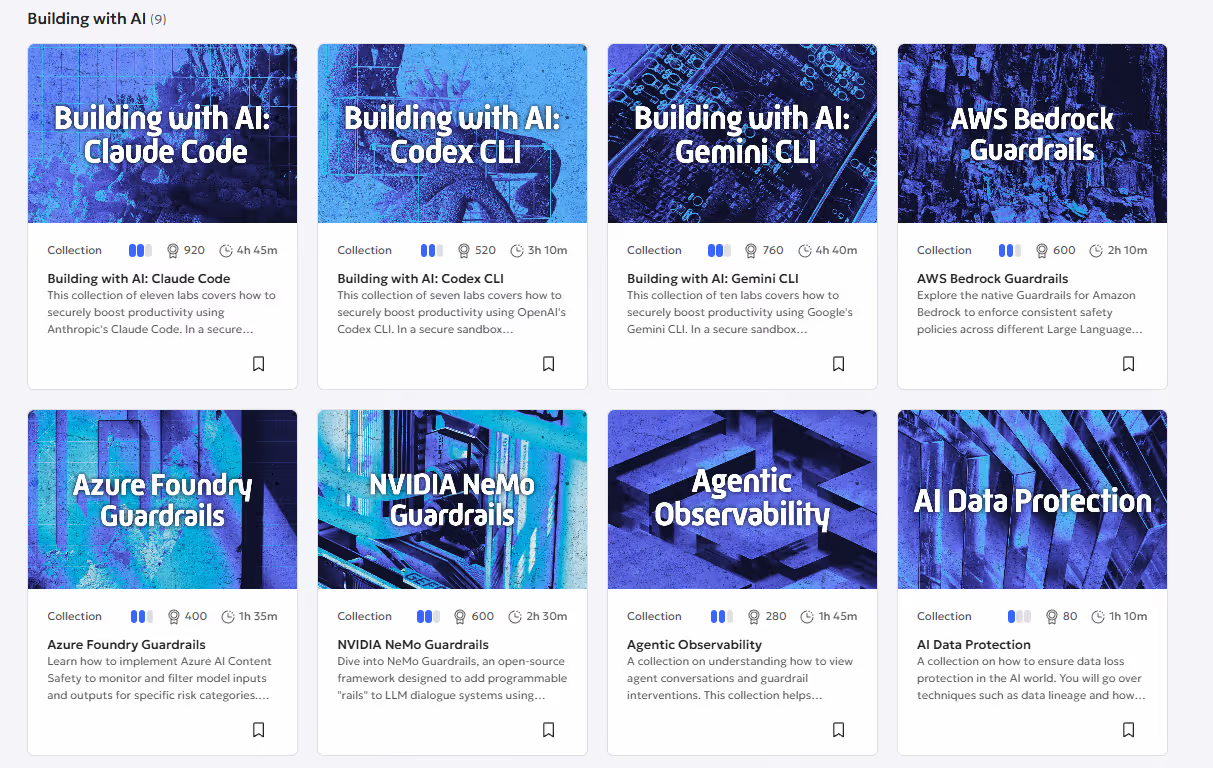
Verify Teams Can Perform Where Risk Happens
Vendor-Enabled Realism on Immersive One brings together realistic exercises, performance validation, benchmarking, and reporting across the tools, workflows, and roles that shape cyber risk today. That like-for-like approach gives managers a clearer view of what teams can do in context, while reporting turns performance into usable evidence: where capability is strong, where gaps remain, and what to prioritize next.
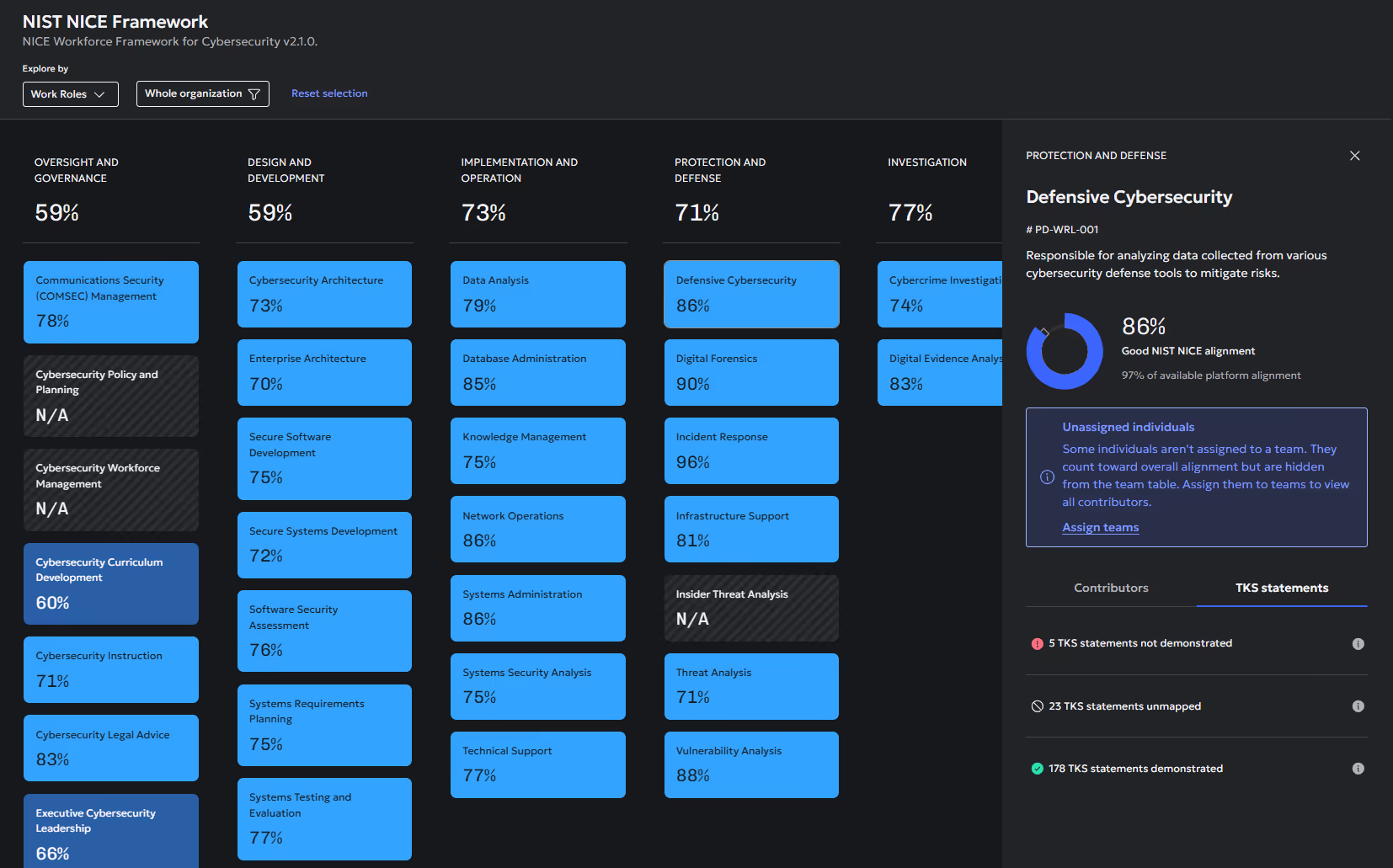
With framework alignment across models such as MITRE ATT&CK, MITRE ATLAS, the NIST AI Risk Management Framework, ISO 42001, and NIST NICE, teams can connect day-to-day performance to broader security, AI governance, and workforce development goals.
As AI reshapes how employees build, defend, automate, and make decisions, Immersive One helps organizations activate readiness with objective proof that teams can perform where risk actually happens.
Get Started
- Already an Immersive One customer? Log in to activate the exercises most relevant to your teams, tools, and readiness goals.
- Exploring Immersive One for your needs? See how Vendor-Enabled Realism validates performance in the tools and workflows your teams use every day when you book a demo.

See how to prove readiness with one platform.
See how Immersive One helps technical teams and leaders prove readiness, close capability gaps, benchmark progress, and report cyber resilience with confidence.