.svg)
AI readiness: prove your organization can adopt AI safely
Build AI literacy, validate competency, test governance, and exercise the workforce and workflows driving AI across your enterprise.
Can you prove your organization can adopt AI safely?
Turn AI policies into measurable proof. Validate AI understanding, govern access, test controls, and prove your teams can use AI safely and perform under pressure - all while controlling access via Okta and MS Entra ID.



.svg)

Five pillars of responsible AI adoption
From workforce literacy to technical controls and organizational exercising, build the evidence needed to adopt AI safely, measurably, and at scale.


Establish a measurable AI baseline
Measure AI capability before learning begins, then reassess afterwards to prove progress. Build workforce-wide AI literacy while giving managers visibility into individual and team capability.

Tie AI access to proven competency
Move beyond policy sign-offs by connecting AI access to demonstrated competency. Set requirements by role and risk, so access reflects an individual’s proven ability to use AI safely.



Train against your own policies
Turn your organization’s AI policies, frameworks, and requirements into practical learning. Build targeted pathways around your specific governance needs, or start with ready-made AI literacy and governance programs.

Show coverage against the frameworks that matter
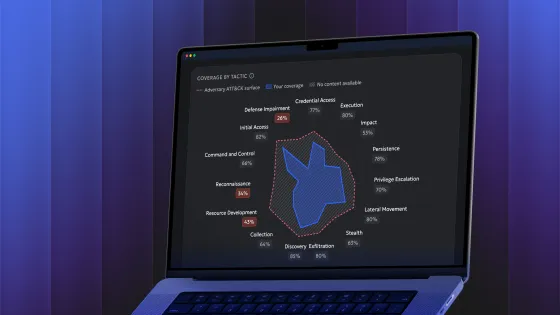
Build measurable evidence against recognized security frameworks. Understand coverage, benchmark technical capability, identify gaps, and demonstrate where teams are prepared and where further development is needed.



Run crisis simulations to test your AI incident response
Put AI governance and rogue AI threats under pressure with realistic crisis simulations. Exercise critical decisions, hand-offs, and controls, then capture evidence of how teams actually respond when an incident unfolds.
Technical controls that back the policy
Governance only works when teams know how to put it into practice. Immersive provides hands-on environments where teams can evaluate AI, understand agent behavior, control access, and apply the security frameworks shaping the AI enterprise.
Evaluate AI before deployment
Assess AI systems for safety, bias, and performance. Build practical capability to evaluate, benchmark, and make defensible deployment decisions.
Understand agent behaviour
See what AI agents do once they are operating inside workflows. Learn to monitor decisions, identify anomalies, and maintain evidence of what happened.
Control agent access
Understand how agents interact with identities, permissions, and connected systems. Build the skills needed to establish appropriate boundaries before agents are trusted with high-impact actions.
Apply AI security frameworks
Build practical capability against the standards shaping AI security, including OWASP Top 10, OWASP Agentic Security, and Agentic Skills Top 10
The cyber proving ground for the AI enterprise
Turn real-world performance into measurable proof of cyber resilience.
Have a question?
Find the answer
Reach out to our friendly
support team.
What is AI readiness?
AI readiness is an organization's proven ability to adopt AI safely, covering workforce understanding, governed access, working controls, and the capacity to perform when something goes wrong. It's distinct from AI policy, which defines what people should do rather than evidencing what they actually do.
What is an AI readiness assessment?
An AI readiness assessment measures AI capability across a workforce before training and again afterwards, so change is measurable rather than assumed. Adaptive Assessments produce individual scores, skill levels, and movement over time, with team views showing the spread from beginner to expert.
What is AI governance, and how do you prove it works?
AI governance is the set of policies, controls, and accountabilities that determine how an organization builds and uses AI. Written controls can look effective until something goes wrong, so proving governance means exercising it, putting teams inside realistic scenarios and capturing what they actually did and when.
Should AI access be tied to proven competency?
Approving AI access through a policy or sign-off records permission, not capability. Tying access to demonstrated competency means employees prove the required capability for their role first, with access following through your existing identity workflow. Stricter controls can be applied to higher-risk roles.
How do you measure AI literacy across a workforce?
Start with a baseline of what people already know, then reassess after learning to show what changed. AI Knowledge Pass delivers practical AI literacy aligned to DigComp 3.0, covering how AI tools work, what happens to employee data, and where human judgment must remain.
Which frameworks matter for AI adoption?
Coverage evidence usually spans both AI-specific and general security standards. The MITRE ATLAS Heatmap shows coverage across adversarial tactics by team and role down to sub-technique, alongside OWASP Top 10 metrics, MITRE ATT&CK benchmarking, OWASP Agentic Security, and AISVS.
What’s New
Latest product updates and threat-led releases from the Immersive team.



Further reading and resources
Featured blog content to deepen the conversation beyond this page.
.webp)