.svg)
Cyber crisis management: know how your teams respond under pressure
Exercise your entire incident response chain against a series of business risk simulations - from incident response and supply chain risk, to operational resilience and rogue AI threats. Prove your teams can respond effectively under pressure when it matters most.
Crisis Simulations: built for the whole response chain
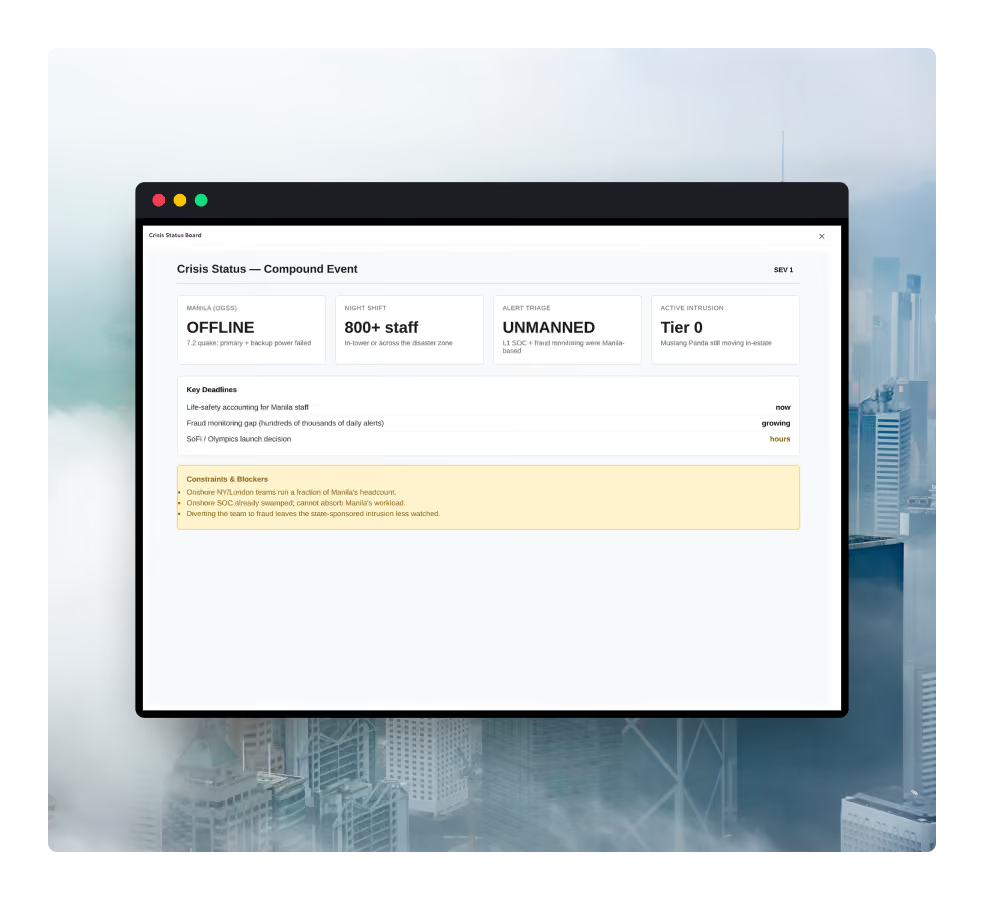
Crisis Simulations turns real threats into branching, decision-based exercises that teams work through as situations unfold - revealing how they respond when the pressure is real.
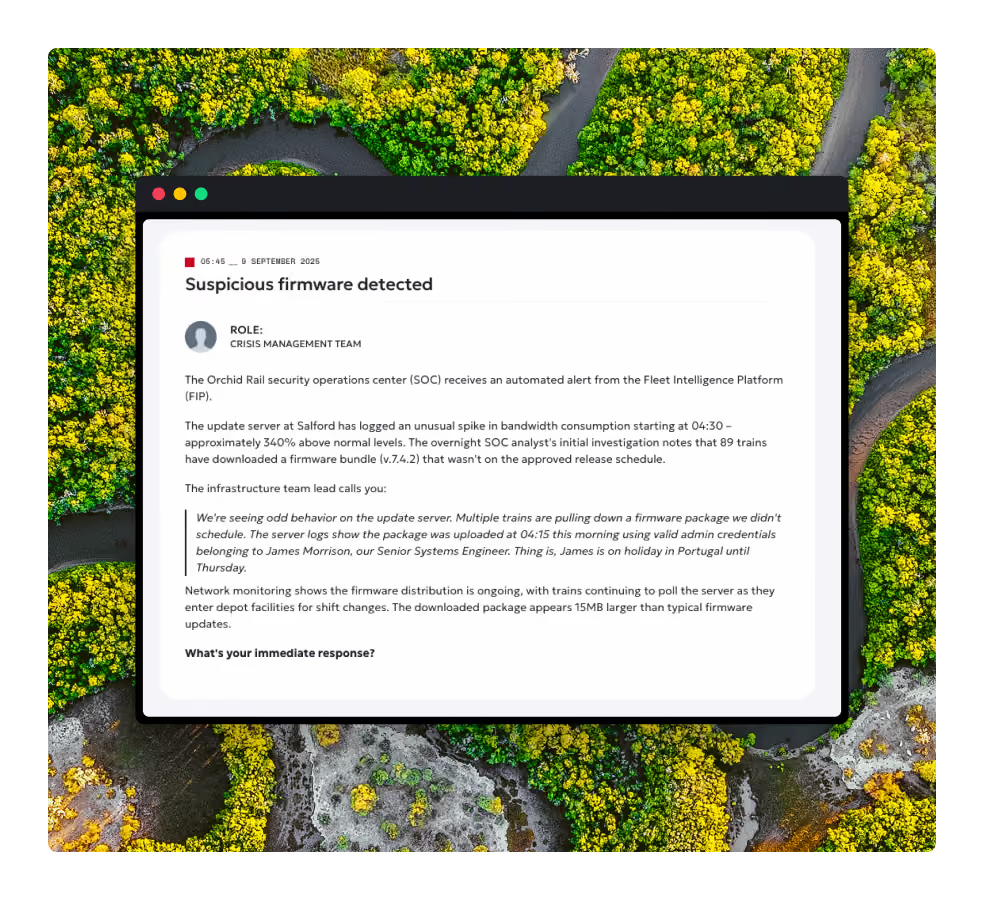
A decision-based crisis exercise
Teams work through live scenarios, making decisions as the situation develops and new information emerges.
Build scenarios around your risks
AI-assisted authoring helps turn your systems, threats, roles, and operating context into realistic exercises based on the situations your organization could actually face.
Exercise from event to crisis
Start with an initial event, test triage and categorization, then escalate into the additional resources, decisions, and procedures required when an incident becomes a crisis.
See what happens under pressure
Measure how people make decisions, where response processes hold or break, and what needs to change before a real incident exposes the gap.



.svg)

Exercise every level of your response
The same scenario can test different decisions across the organization - from technical triage to operational coordination, continuity, and executive leadership.
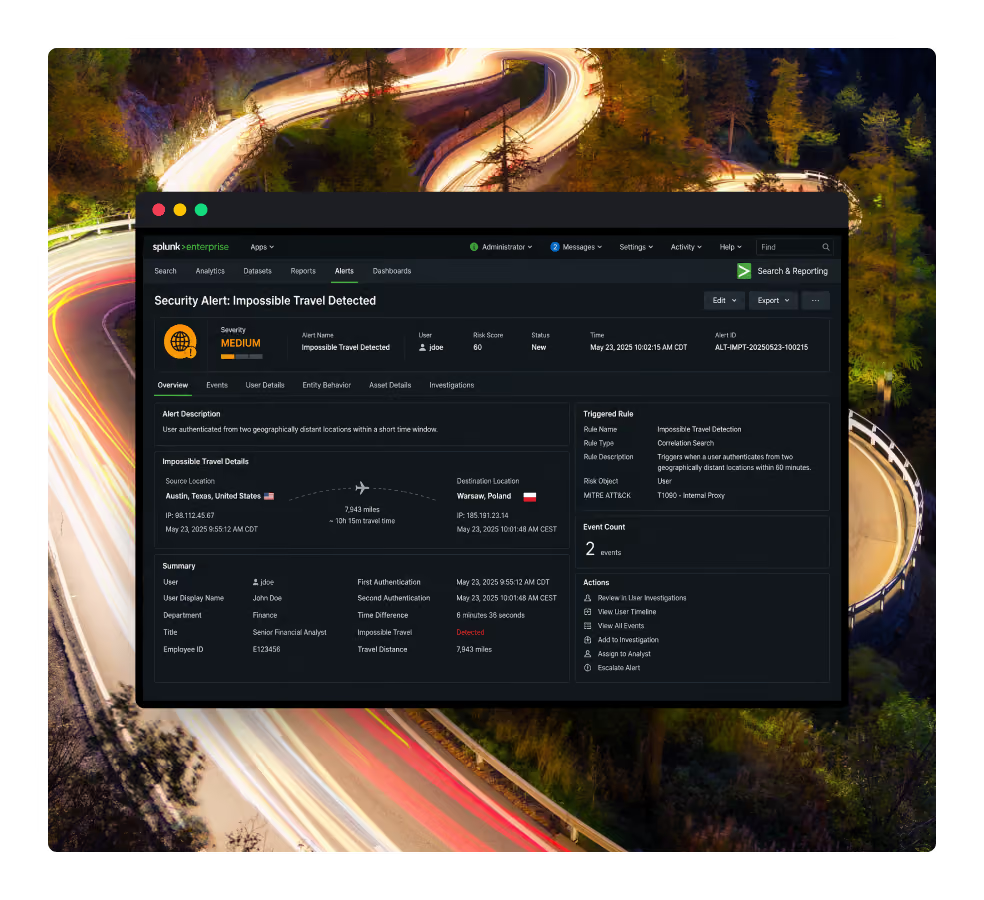

SOC and incident response teams
Drop analysts into realistic intrusions with alerts, logs, and forensic information. Test triage, categorization, containment, and escalation against emerging threats.

Incident managers and leads
Give tactical leaders the operational picture and difficult trade-offs. Test when to escalate, who to involve, what to communicate, and when to act.
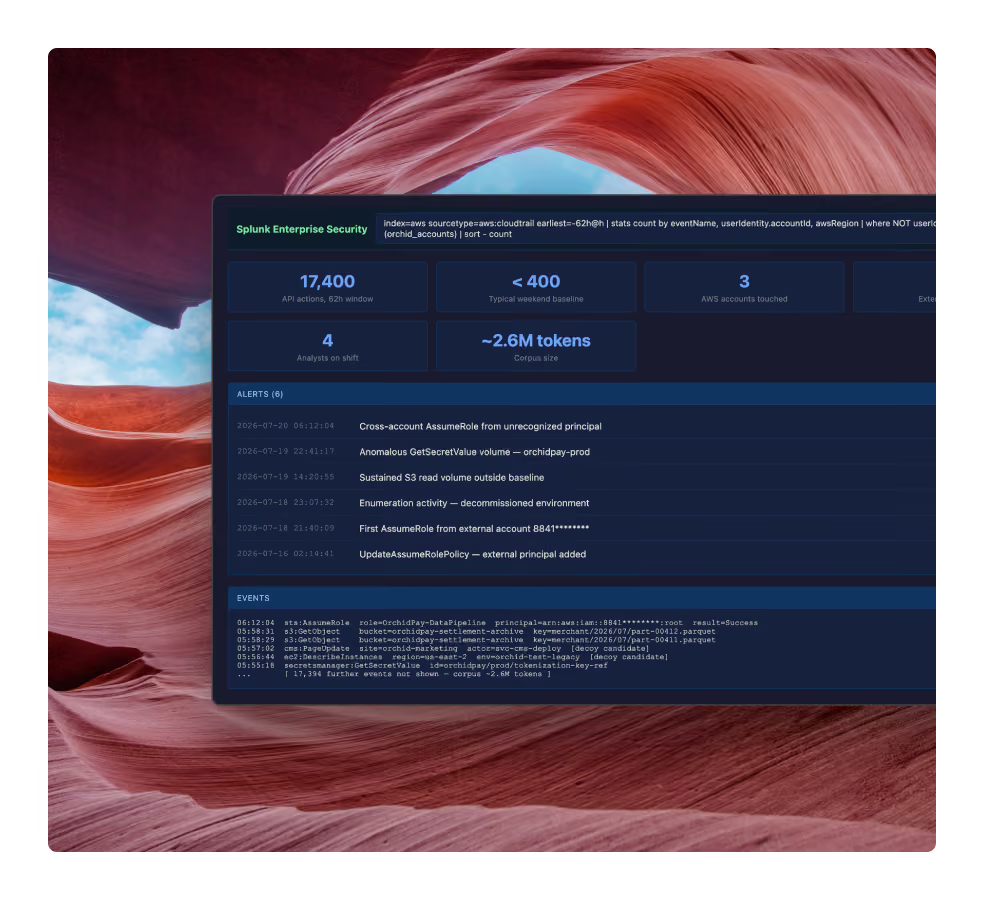

Business continuity teams
Rehearse recovery, failover, and continuity decisions when critical systems are disrupted. See how plans perform when circumstances change and pressure builds.

Executives and the board
Put leaders in the seat when financial, legal, regulatory, and reputational decisions collide. Test whether briefings, governance, and decision-making support effective action.
Turn crisis exercises into evidence of readiness
Every exercise creates measurable evidence of how your organization responds - helping you identify gaps, improve performance, and demonstrate progress over time.
Realistic by design
Scenarios grounded
in real threats
Build scenarios around emerging threats, your critical systems, organizational roles, and the response processes people are expected to follow.
Decisions, scored
See where
response holds
Capture the decisions teams make as the scenario unfolds, showing where judgement, coordination or escalation breaks down under pressure.
Mapped to a framework
Coverage across
the crisis lifecycle
Map exercises across response, containment, continuity, and communications to understand coverage and track readiness across repeated exercises.
Debriefed and reported
Turn gaps into
next actions
Every session produces an after-action view of performance, highlighting what worked, where gaps emerged, and what teams should improve next.
The cyber proving ground for the AI enterprise
Turn real-world performance into measurable proof of cyber resilience.
Have a question?
Find the answer
Reach out to our friendly
support team.
What is crisis management?
Crisis management is how an organization coordinates decisions, communications, and recovery when an incident escalates beyond normal operations. In a cyber context it spans the full response chain, from the first alert through technical triage and containment to executive decisions on financial, legal, regulatory, and reputational exposure.
What's the difference between a tabletop exercise and a crisis simulation?
A tabletop exercise is usually a facilitated discussion around a static scenario, walking through what teams would do. A crisis simulation is decision-based and branching: participants make choices as the situation develops, those choices change what happens next, and the decisions are captured and scored. Crisis Sim runs on participants' phones, so exercises don't need everyone in one room.
How do AI-driven incidents change crisis response?
AI is compressing the path from an initial event to a full business crisis, leaving less time to triage, decide, escalate, and communicate. That puts more pressure on escalation thresholds and executive decision-making in particular, which is why exercises need to cover the whole response chain rather than technical response alone.
Who should take part in a cyber crisis exercise?
The same scenario should test different decisions at different levels: SOC and incident response teams on triage, categorization, containment, and escalation; incident managers on operational trade-offs; business continuity teams on recovery and failover; and executives on financial, legal, regulatory, and reputational decisions.
How do you measure crisis readiness?
By capturing what people actually did, not what the plan said they should. Each exercise records the decisions teams made as the scenario unfolded, shows where judgment, coordination, or escalation broke down, and produces an after-action view highlighting what worked and what to improve. Repeating exercises tracks readiness over time.
What’s New
Latest product updates and threat-led releases from the Immersive team.



Further reading and resources
Featured blog content to deepen the conversation beyond this page.
.webp)